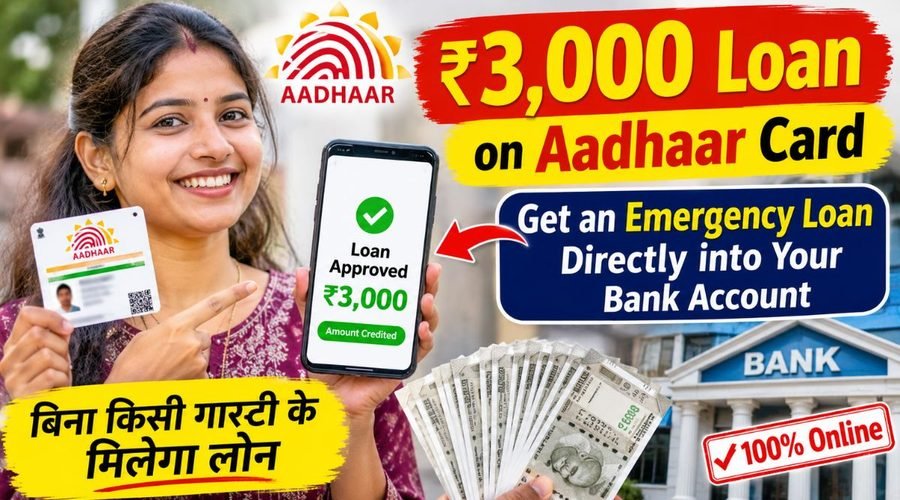
In today’s world, someone might suddenly need money, like for purchasing medicines, paying electricity bills, covering children’s school fees, or just handling everyday household responsibilities. In those moments many people start hunting for a small emergency loan of ₹3,000. Online there are different ways to get a loan with an Aadhaar card, some banks and also digital lending apps mention small amount personal loans where an Aadhaar card is used for identity and KYC verification. Still, showing an Aadhaar card on its own is not some sort of magic pass, the lender will check eligibility, plus other relevant details, before saying yes.
What is a ₹3,000 emergency loan?
A ₹3,000 emergency loan is a loan for small amounts that is usually applied for during emergencies to cater for unexpected expenses. This allows borrowers to take care of their urgencies for some time. Most online loan providers nowadays have online application facilities, and you do not have to visit a bank branch for applying for a loan. After getting approval for a loan, the money can be deposited directly into your bank account.
Can you get a loan using only an Aadhaar card?
In India, an Aadhaar card is like a crucial document for identity as well as residence verification . A lot of banks and NBFCs, (Non-Banking Financial Companies) provide Aadhaar based e-KYC, which basically helps them confirm details faster. But it does not automatically mean that anyone can just bag a ₹3,000 loan only because an Aadhaar card exists. Usually lenders will want more than that, they might ask for things like a PAN card, bank account particulars, proof of earnings, and even past credit behaviour.
Who is eligible to apply for a ₹3,000 loan?
In India, an Aadhaar card is like a crucial document for identity as well as residence verification . A lot of banks and NBFCs, (Non-Banking Financial Companies) provide Aadhaar based e-KYC, which basically helps them confirm details faster. But it does not automatically mean that anyone can just bag a ₹3,000 loan only because an Aadhaar card exists. Usually lenders will want more than that, they might ask for things like a PAN card, bank account particulars, proof of earnings, and even past credit behaviour.
Documents required for obtaining a loan
During the application process, you may be asked to provide your Aadhaar card, PAN card, mobile number, and bank account details. Some institutions may also request proof of income, bank statements, or information regarding your employment or business. It is helpful to have the mobile number linked to your Aadhaar card active, as OTP verification may be required for the e-KYC process.
A simple way to apply online
Okay so first find a trustworthy digital platform tied to a bank or an NBFC that’s actually regulated by RBI, like on their official app or website. Then go there, click around, and look for the option that says personal loan ( sometimes it’s just labeled Personal Loans, depends on the page ). After that, fill the application, carefully, but not rushed—enter your name, mobile number, Aadhaar details and the other details they ask for, like employment and address info. Then complete the KYC step the way it’s required, upload/verify what they request, and once that is done choose a loan amount based on what you’re eligible for. Before you submit , do a quick check of the interest rate , also the processing charges and the repayment schedule, because those pieces matter later.
How are funds credited to your bank account?
Once a loan application is approved, the respective bank or financial institution will transfer the sanctioned amount to the applicant’s verified bank account. The time taken for the funds to be credited depends on the institution’s internal processes, KYC verification, and banking systems. Therefore, do not assume that the funds will be credited to your account immediately upon application.
Information on interest rates and other charges
Even little loans can incur interest and processing costs. Some digital loans may also attract extra charges for late payments. Before taking a loan, make sure you know the total will need to be repaid, the APR, the EMI, and the loan tenure. Don’t make your borrowing decision based purely on the fact that the EMI is low.
How to avoid fraudulent loan apps?
Currently, there are cases of scams regarding loans online. It is vital not to give your Aadhaar number, OTP, UPI PIN, or bank password to an untrusted app. Always ensure the lender’s identity and the regulatory body of the lender. Be mindful of those apps that talk you into making a big deposit or asking you to make payments without disclosing any terms and conditions in advance.
Things to keep in mind before taking a loan
Only avail of a loan of ₹3,000 if you genuinely require it and are assured that you can repay it quickly. Be certain that you know when repayment needs to be made, the interest rates being charged, and whether there are any penalties or other fees applicable. Timely repayment of your EMIs can help boost your credit track record while overdue repayments can adversely affect your eligibility for loans in the future.
Conclusion
A ₹3,000 emergency loan may be a solution to a minor unplanned financial need. Although the KYC process can be streamlined if someone uses an Aadhaar card for that, approval of the loan is not only based on the Aadhaar card. So, it is best to select a well-known bank or financial institution, read the terms and costs thoroughly, as well as to ensure that the loan amount corresponds to loan repayment capabilities.
FAQs
Q1. Can I get a ₹3,000 loan using only my Aadhaar card?
Aadhaar can help with KYC verification, but lenders may also require PAN, income details and other documents.
Q2. How will I receive the ₹3,000 loan amount?
A. If your application is approved, the lender may transfer the amount directly to your verified bank account.
Q3. Is an Aadhaar-based emergency loan instantly approved?
A. No. Approval depends on the lender’s eligibility criteria, document verification and credit assessment.